

WOMEN’S DAYS FOR CULTURE OF PEACE
Join the Movement
Women’s Days for Culture of Peace — a global citizen initiative
The world is short on peace. It is not short on people who want it. This page explains why Women’s Days for Culture of Peace matters — and how you can be part of building it.
WCP
Global Initiatives
The world is spending more on weapons than at any point since the Cold War ended. Meanwhile, funding for gender equality and development is shrinking. Something is missing — and more people are starting to say so.
Ministers of Culture, UNESCO, and civil society organisations are converging on the same conclusion. Development cannot succeed without culture. Peace cannot hold without women. A new global movement is taking shape — and it is looking for frameworks that connect these truths.
Women’s Days for Culture of Peace is RYB’s contribution. It is modest and honest. We are not a large institution. We are a small team with a clear idea — building community, day by day, around arts, culture, and peace.
THE CONTEXT
Why This Moment Matters
Two parallel trends are shaping global development in 2026. They point in opposite directions — and the gap between them is where the crisis lives.
$2,718B
global military spending in 2024 — highest since Cold War
−7.1%
fall in official development aid in 2024 — first drop in five years
47%
of women’s organisations may close within 6 months without new funding
120M+
people forcibly displaced — the highest number ever recorded
47%
Women’s organisations at risk of closing
UN Women surveyed women-led organisations in humanitarian crises. Nearly half may shut down within six months if current funding levels persist.
Source: UN Women, May 2025
90%
Pushed to a breaking point
Nine in ten women’s organisations report critical funding shortfalls. 51% have already suspended programs. 72% have laid off significant numbers of staff.
Source: UN Women, May 2025
$106M
Total global feminist movement budget
In 2013, the combined annual budget of 740 women’s organisations worldwide was $106 million. One F-35 fighter jet costs $156 million. The comparison says everything.
Source: AWID 2013 / US DoD
35%
Peace agreements more durable with women
When women participate meaningfully in peace processes, agreements are 35% more likely to last. The data is clear. The investment is not.
Source: Georgetown GIWPS
The contrast in 2024 global priorities
MILITARY SPENDING
$2,718B
↑ 9.4% in one year — steepest rise since end of Cold War
DEVELOPMENT AI (ODA)
~$223B
↓ 7.1% — first drop after five consecutive years of growth
“These cuts are not just budget decisions. They are choices about whose safety matters — and whose does not.”
— UN Women Executive Director Sima Bahous, May 2025
WHAT’S MISSING
Culture Is the Missing Piece
Economic growth alone has never produced sustainable peace. Security without justice does not hold. Development without culture leaves people behind.
Ministers of Culture from more than 150 countries signed the MONDIACULT 2025 declaration in Barcelona. They called for culture to become a standalone Sustainable Development Goal. A dedicated Culture SDG — sometimes called SDG 18 — would bring its own funding mandates, accountability frameworks, and global reporting mechanisms.
This matters directly for Women’s Days. Culture is not decoration. It is how values shift. How norms change. How communities imagine a different future — and start building it.
EMERGING POLICY AGENDA
SDG 18: A Culture Goal for 2030 and Beyond
The post-2030 development agenda is now being negotiated at the UN. Culture’s inclusion as a dedicated goal would represent the biggest shift in global development thinking since 2015. RYB supports this movement — and builds its own cultural framework around it.
THE INITIATIVE
Why Women’s Days for Culture of Peace
We did not design Women’s Days as a response to crisis. We designed it as an ongoing practice. But the current moment gives it new urgency.
When funding for women’s organisations collapses, visibility becomes more valuable. When official agendas retreat from gender equality, civil society must step forward. When institutions hesitate, communities act.
It keeps women visible — year-round
One international day is not enough. 193 national days, spread across every month, create continuous public attention on women's contributions and challenges.
It roots the present in history
Each day is anchored in suffrage history — the hardest-won right women hold. Remembering that changes took struggle helps communities understand that change requires sustained effort.
It uses culture as its medium
Arts, storytelling, music, and shared spaces move people in ways that statistics and policy documents cannot. Culture builds the emotional foundation for lasting change.
It works at the community level
No government needs to approve it. No budget needs to be allocated first. Any individual, school, organisation, or community group can mark their country's Women's Day — today.
It connects local action to global movement
Each national day is a small act. Together, 193 of them form a coherent global statement — that peace is not a summit outcome. It is a daily practice.
THE WCP APPROACH
Not Leadership. Collaboration.
Women, Culture, and Peace does not mean women at the top of a hierarchy. That framing already exists — and it is important work. But it is not what WCP is about.
WCP follows a different model. Not the Alinsky model of power, confrontation, and organised campaigns to extract resources from those above. Not competition for seats at a table defined by others. Something older and, we think, more durable — a women-centred approach grounded in relationship, care, and shared creation.
ALINSKY MODEL
Power and confrontation
- Organised campaigns targeting institutions
- Clear opponents and strategic pressure
- Winning resources from those who hold them
- Vertical structure — strong leadership
- Success measured by power gained
WOMEN-CENTERED MODEL
Relationship and co-creation
- Building connections across communities
- Shared goals — no single opponent
- Creating something new together
- Horizontal — distributed leadership
- Success measured by what is built together
Both models have their place. But the world already has plenty of the first kind. It is short on the second.
“The Alinsky model is defined by power dynamics and strategic confrontation. The women-centred model prioritises relationship-building, nurturing human connections, and creating holistic community networks.”
— Stall & Stoecker (1998), Community Organizing or Organizing Community?
WCP draws on the women-centred model as described by Stall and Stoecker. It is not about replacing men with women. It is not about competition for positions. It is about a different way of being in community — one that the world has always had, and that the dominant culture consistently undervalues.
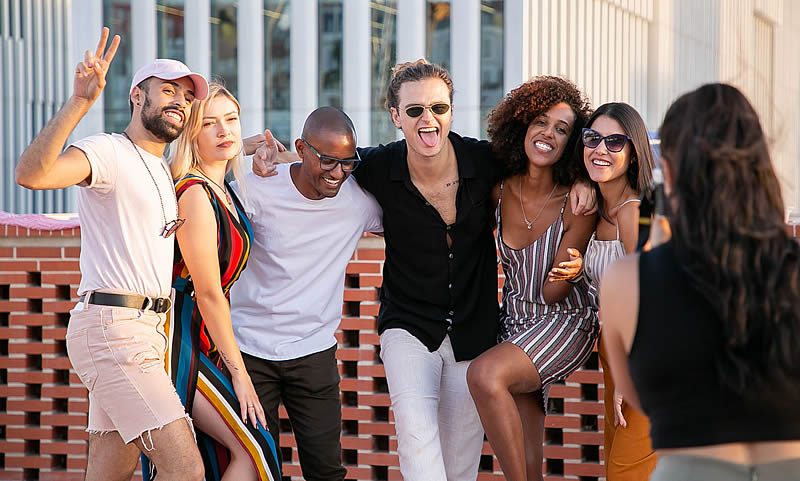
WHAT DOES THIS LOOK LIKE IN PRACTICE?
Collaboration Over Competition
Look at the major events that define global culture. Almost all of them are built on competition. Someone wins. Everyone else does not.
The Olympics
Nations competing. Individual athletes winning medals. The world watches who is best.
World Cup
One country lifts the trophy. All others are eliminated. The structure is a pyramid to a single winner.
Eurovision
Songs competing across borders. Points awarded. One winner per year — and the rest remembered by ranking.
Awards seasons
Oscars, Grammys, Booker Prize. The creative industries organise much of their public life around competition and ceremony.
These events are not bad. But they represent one way of organising collective attention. They are not the only way — and they crowd out the other way.
What would a major global event look like if it was built on collaboration instead? Where no one competes — but everyone contributes? Where the measure of success is what was created together, not who came first?
Beach clean-ups
Thousands of local initiatives. No winner. Everyone leaves with a cleaner beach, stronger community ties, and something done.
Street greening
Neighbours decide together to make their street more beautiful. They plant, build, and share the result equally.
Repair together
A community fixes one neighbour's house. Next time, another. Skills shared. No money exchanged. Dignity preserved.
Sharing economy
Share a car. Share tools. Share a garden. What belongs to one can serve many — reducing cost and building connection.
Raising children together
Men, women and community sharing care together. Not a women's issue — a shared one. When labour is shared, everyone is better off.
Creating culture together
A mural painted by a neighbourhood. A song written in a workshop. A story told in a circle. Culture that belongs to everyone.
These are not minor things. They are the fabric of what makes life liveable. And they are almost entirely absent from the global agenda — from summits, from headlines, and from funding pipelines.
Women’s Days for Culture of Peace is an attempt to give them visibility. One day, one country, one platform. Not to celebrate winners — but to make the collaborative work visible, honoured, and repeatable.
HOW RYB SEES IT
Horizontal, Open, and Built Together
The Women’s Days initiative has no headquarters and no membership. Anyone can study the concept. Anyone can contribute to it — creatively, analytically, locally. The framework is open. The direction is shared.
We are not building a pyramid with RYB at the top. We are building a network — horizontal, distributed, and stronger at the edges than at the centre. Every community that marks its Women’s Day adds something to the whole. No one needs permission.
This is also how we think about governance more broadly. Major decisions affecting many people should not rest with one person. We think the minimum unit of leadership is three — people who must listen to each other, represent different perspectives, and include at least one woman and one man. Not because this is utopian, but because it is simply more robust. Democracy, at its most basic, means no single person holds too much.
A note on language
We consciously avoid the phrase “women’s leadership” in the WCP context — not because women’s leadership is unimportant, but because it can suggest competition for the same power structures that created the problem. UN Women, UN Security Council Resolution 1325, and the Women, Peace and Security agenda already do excellent work on political representation. We support it.
What WCP adds is different: the question of what kind of society we are building, not only who leads it. That question is cultural before it is political. It requires a different set of tools — and a different kind of patience.
The women-centred model is not a women-only model. It is an invitation to everyone — men, women, and people of all backgrounds — to organise social life around care, creativity, and collaboration rather than competition and hierarchy.
ABOUT RYB
Who Is Behind This
RYB Global Development is a small social enterprise based in Amsterdam. We connect 193 countries through arts, culture, and data. We build online — one page, one concept, one community at a time.
We are not a large NGO with a fundraising department. We are not a think tank issuing policy papers. We are people who believe that culture changes things — and who are building evidence for that belief, carefully and over time.
Women’s Days for Culture of Peace is one of our central concepts. It sits within the broader Women, Culture and Peace (WCP) framework — our interpretation of UNESCO’s Culture of Peace programme, built around a women-centred approach to community and collaboration.
We share what we build. We welcome feedback. We learn from our visitors and community. We are not in a rush — but we are dedicated, and we show up every day.
TAKE PART
How to Join
There is no membership form. There is no fee. Joining means choosing to participate — in whatever way fits your context and capacity.
Join the RYB community online
We are building community first online — on social media and in our Telegram group. Follow us for updates on Women’s Days, the Culture SDG, and global development news. Share what you are doing. Ask what you want to know. The conversation is open.
RYB connects 193 countries through arts, culture, and data. All are welcome — researchers, educators, artists, policymakers, and curious citizens.
Sources and Links
Funding and aid data
OECD. Development Aid Falls in 2024 — DAC statistics.
oecd.org/en/topics/official-development-assistance-oda
SIPRI. World Military Expenditure Reaches $2,718 Billion in 2024.
sipri.org/media/press-release/2025/world-military-expenditure-reaches-2718-billion-2024
UN Women. Funding Cuts Threaten Women’s Organizations in Humanitarian Crises, May 2025.
unwomen.org/en/news/stories/2025/5/press-release-funding-cuts
AWID. Where Is the Money for Women’s Rights? Global feminist movement funding research, 2013.
awid.org/publications/where-money-womens-rights-revisited
Culture and peace
UNESCO. MONDIACULT 2025 — World Conference on Cultural Policies and Sustainable Development, Barcelona.
unesco.org/en/mondiacult
United Nations. Declaration on a Culture of Peace, A/RES/53/243, 1999.
digitallibrary.un.org/record/285677
Georgetown Institute for Women, Peace and Security. Women’s participation in peace processes.
giwps.georgetown.edu
RYB pages
RYB. Women, Culture and Peace (WCP) Framework.
redyellowblue.org/women-culture-and-peace
RYB. Women’s Days for Culture of Peace — overview.
redyellowblue.org/womens-days-for-culture-of-peace
RYB. SDG 18 — Culture as a Sustainable Development Goal.
redyellowblue.org/sdg-18