

WOMEN’S DAYS FOR CULTURE OF PEACE
Women’s Right to Vote
A map of rights. A roadmap for change.
Every country on earth now grants women the right to vote. Yet in half the world, that right exists on paper more than in practice. This page tells the gap between law and life.

Women’s Days
WCP
Global Initiatives
The right to vote is the most basic political right. Winning it took women more than 120 years of organised struggle. Yet winning the legal right was only step one.
Today, every UN member state formally allows women to vote. But voting participation tells a different story. In many countries, legal rights exist alongside cultural barriers, practical obstacles, and outright intimidation. The result: millions of women hold a right they cannot freely exercise.
This page analyses where women vote, where they don’t, and why the gap matters. It connects to the Women’s Days for Culture of Peace initiative — which uses suffrage history as the foundation for year-round action on gender equality.
193
UN member states with formal women’s suffrage
26.7%
women in national parliaments globally (2024)
26.7%
women in national parliaments globally (2024)
2021
Afghanistan — most recent reversal of women’s rights
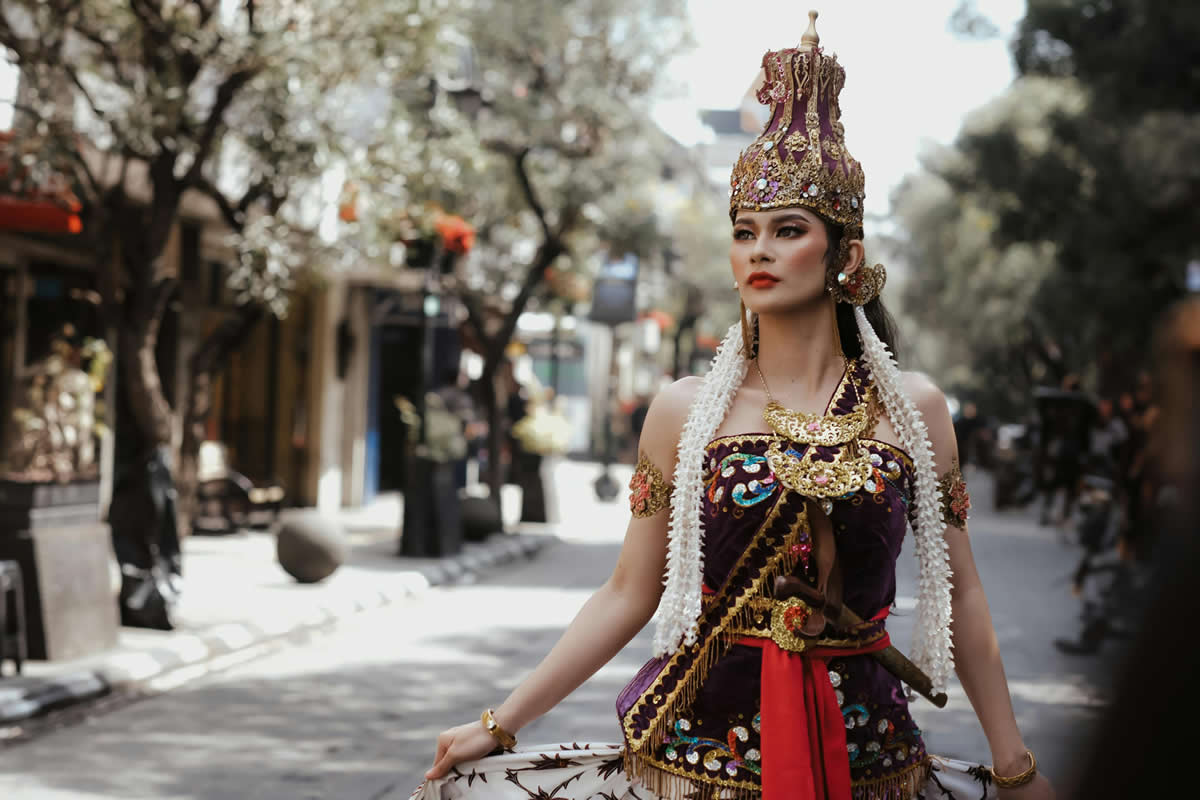
Traditional Sundanese Costume, Indonesia – © Fanny Hariadi
THE CORE ISSUE
The Right Exists. The Reality Doesn’t Always Follow.
A law granting the right to vote does nothing on its own. A woman must know the election is happening. She must be able to reach the polling station. She must feel safe casting her ballot. She must believe her vote will count. All four conditions fail regularly, in every region of the world.
Political scientists distinguish between formal suffrage (the legal right) and substantive participation (the real ability to exercise it). The gap between the two is where gender inequality lives — invisible in constitutions, visible in data.
“Women’s political participation is not just about voting. It is about having an equal voice in the decisions that shape all our lives.”
— UN Women, Progress on the SDGs: Gender Snapshot 2024
THE DATA
Where Women Vote More — and Where They Don’t
Voter turnout data reveals a clear pattern. In established democracies with strong gender equality frameworks, women vote at equal or higher rates than men. In regions with weaker institutions or strong patriarchal norms, a significant gap opens.
Women's vs. Men's Voter Turnout — Selected Countries (latest available elections)
Sweden — Women
87%
Sweden — Men
85%
United States — Women
68%
United States — Men
65%
New Zealand — Women
83%
New Zealand — Men
80%
Iraq — Women
36%
Iraq — Men
44%
Rwanda — Women
97%
Rwanda — Men
96%
Sources: IDEA Voter Turnout Database · IFES · UN Women · national electoral commissions. Figures reflect most recent available national elections.
REGIONAL PICTURE
Six Regions. Six Stories.
No region tells a single story. Progress and setback exist side by side everywhere. But patterns emerge — and they reveal which conditions make women’s participation real rather than nominal.
85%
avg. female turnout
Europe
Europe leads globally. Nordic countries consistently show women voting above 85%. Strong legal frameworks, accessible polling, and cultural normalisation all contribute. France and Germany show near-parity. Portugal and Spain — late to suffrage (1975, 1976) — now rank among the continent’s strongest performers.
67%
avg. female turnout
Americas
The United States has recorded higher female than male turnout since 1980. Canada follows a similar pattern. Latin America shows rapid improvement — Brazil’s gender quotas and Colombia’s civic campaigns have measurably raised women’s participation over the past decade.
72%
avg. female turnout
Asia-Pacific
Australia achieves near-perfect parity. New Zealand — the world’s oldest women’s suffrage country — consistently records women voting above men. India has made dramatic gains; women now match men nationally. But significant variation remains across Southeast Asia and the Pacific islands.
61%
avg. female turnout
Africa
Africa’s headline story is Rwanda — where women hold 61% of parliamentary seats, the highest proportion in the world. But turnout figures vary widely. Chad, South Sudan, and parts of the Sahel show persistent gender gaps driven by security concerns, distance, and social norms.
48%
avg. female turnout
Middle East & North Africa
The region holds the largest gender gaps in participation. Iraq, Yemen, and Libya show consistent differences of 8–15 percentage points. Tunisia is the regional outlier — with 67% female turnout and active women’s political movements. Saudi Arabia granted women the vote only in 2015.
0%
avg. female turnout
Conflict Zones
Conflict disrupts all political participation — but women face disproportionate barriers. In active conflict areas, polling stations are frequently unreachable, unsafe, or functionally closed to women. Afghanistan represents the starkest case: a complete reversal of rights since 2021.
CRISIS CASE
Afghanistan: When Rights Reverse
Complete ban since August 2021
The Taliban government has banned women from political participation, education beyond primary school, most employment, and public life. Afghan women voted at rates comparable to men in the 2019 elections. That right no longer exists. The international community, including the UN and EU, has repeatedly called for reinstatement.
Afghanistan is the only country in the world to have formally removed women’s political rights after granting them. It is a warning. Rights are not permanent. They require active protection — by institutions, by civil society, and by international community solidarity.
The Women’s Days initiative keeps Afghanistan on the calendar. January 26 remains Afghanistan’s Women’s Day. The page documents what was — and what must be restored.
BARRIERS
Five Obstacles Between Rights and Reality
Legal enfranchisement is necessary — but not sufficient. Even in countries with full formal equality, these five barriers reduce women’s real participation.
Distance and infrastructure
Rural women in many countries must travel hours to a polling station. Limited transport, unpaid care responsibilities, and time constraints all reduce turnout.
Information access
Women are less likely to have access to voter education, especially where literacy rates are lower or media access is restricted. Not knowing = not voting.
Social permission
In many societies, women require explicit or implicit approval from male family members to vote. This informal control is invisible to legal frameworks.
Safety and intimidation
Threats, violence, and harassment at polling stations deter women in conflict zones and some authoritarian contexts. Fear is a more effective barrier than law.
Identity documentation
In countries requiring ID to vote, women — who are registered less frequently than men in civil systems — face a practical barrier that disenfranchises without a formal ban.
WHY IT MATTERS
What Women’s Votes Actually Change
Sceptics sometimes ask: does it really matter whether women vote? The research is clear. It does — measurably and significantly.
Countries with higher female voter turnout consistently show stronger outcomes across health, education, and social policy. This is not coincidence. Women’s priorities — childcare, healthcare access, school quality, community safety — enter the policy agenda when women vote and hold office in meaningful numbers.
Better health outcomes
Higher female political participation correlates strongly with lower maternal mortality, higher vaccination rates, and improved child nutrition.
Stronger education systems
Countries where women vote and hold office invest more in early childhood education and have higher female literacy rates across generations.
More durable peace
Research from Georgetown GIWPS shows that women's participation in peace processes increases the likelihood of a lasting agreement by 35%.
Lower corruption
IPU and World Bank data show consistent correlation between higher female representation in government and lower levels of public sector corruption.
“No country can achieve sustainable development, lasting peace or prosperity if half its population is left behind.”
— Phumzile Mlambo-Ngcuka, former Executive Director, UN Women
THE WCP CONNECTION
Voting Is Culture. Culture Is Peace.
The Women, Culture and Peace (WCP) framework argues that political change follows cultural change. Laws can be passed overnight. Cultures shift over generations — through education, through storytelling, through visibility.
This is why Women’s Days for Culture of Peace anchors each national day in suffrage history. The date is not just commemorative. It is a reminder that the right to vote was once unimaginable — and that it became real because people refused to accept the world as it was.
Each Women’s Day is a platform for exactly that kind of cultural work. Stories shared. Data made visible. Communities that say: we remember how far we have come, and we are not done yet.
LOOKING FORWARD
The Vote Was Won. Political Equality Is Not Yet.
Women hold 26.7% of parliamentary seats worldwide. The WEF projects 131 years to reach full gender parity at current rates. These numbers are not destiny — they are a pace that can change.
Three things accelerate progress. First, quotas and legal frameworks that require gender balance in candidate selection. Second, voter education programmes that reach women specifically — with their language, their barriers, their context. Third, cultural movements that make women’s leadership normal, visible, and expected.
Women’s Days for Culture of Peace contributes to the third. One day per country. One platform for visibility. Year-round, across all 193 nations. Not waiting for a summit. Acting now — through culture, through data, through community.
The vote was the beginning. Equal participation is the destination. The distance between them is the work still ahead.
← History: Women’s Suffrage
← Women’s Days Calendar
WCP Framework →
Global Call to Action →
Sources and Links
Primary data
Inter-Parliamentary Union (IPU). Women in National Parliaments — global statistics 2024.
ipu.org/women-in-parliament
International IDEA. Voter Turnout Database — gender-disaggregated data.
idea.int/data-tools/data/voter-turnout-database
UN Women. Progress on the Sustainable Development Goals: Gender Snapshot 2024.
unwomen.org/en/digital-library/publications/2024/09/gender-snapshot-2024
World Economic Forum. Global Gender Gap Report 2024.
weforum.org/reports/global-gender-gap-report-2024
Research and analysis
Georgetown Institute for Women, Peace and Security (GIWPS). Women’s participation in peace processes.
giwps.georgetown.edu
Varieties of Democracy (V-Dem). Women’s Political Participation Index.
v-dem.net
Freedom House. Political Rights and Civil Liberties — country scores.
freedomhouse.org/country/scores
Pew Research Center. Gender and voting behaviour research.
pewresearch.org/topic/politics-policy/political-parties-polarization/gender-politics/
Regional sources
European Commission. Gender equality in politics — EU data.
ec.europa.eu/info/policies/justice-and-fundamental-rights/gender-equality
African Union. Women’s political participation framework.
au.int/en/gender
IDEA. Compulsory Voting database.
idea.int/data-tools/data/voter-turnout-database/compulsory-voting
RYB related pages
RYB. Women, Culture and Peace (WCP) Framework.
redyellowblue.org/women-culture-and-peace/
RYB. History: Women’s Suffrage.
redyellowblue.org/womens-days-for-culture-of-peace/history-womens-suffrage/
RYB. Women’s Days Calendar.
redyellowblue.org/womens-days-for-culture-of-peace/calendar/