
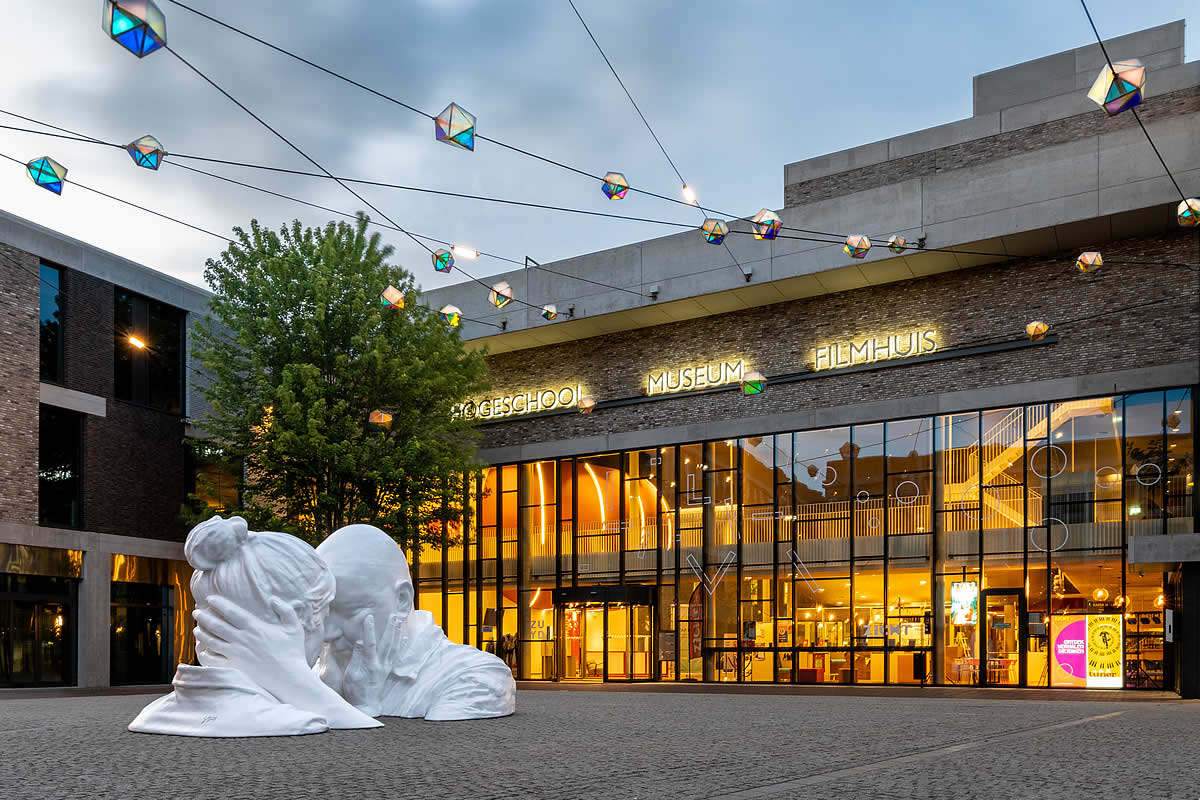
Evening view of Sittard's Ligne Cultural Center with modern sculpture and festive lights — photo Lorna Pauli
The Cosmology of Peace Exhibition
The Cosmology of Peace framework is moving from research into physical space. We are building a touring exhibition that gives visible, walk-through form to our projects — starting as a single exhibition and designed from the outset to expand, travel, and grow city by city and country by country.
Cosmology of Peace
A Touring, Expanding Exhibition
Rather than a one-off show in a single city, the exhibition is conceived as a growing format: a first edition establishes the core stage and artworks, and each future edition can add new works, new regional partners, and new local artists as it travels. Where and when the first edition opens will be announced when confirmed.
Three Modules, One Framework
Each edition of the exhibition is built from three connected modules:
The Master Theme: The Cosmology of Peace
The universal umbrella that frames the whole exhibition — how civilisations have historically aligned colour, geometry, and cosmic order to build cross-border understanding, and how that history connects to a culture of peace today.
The Traveling Art Gallery: Red Yellow Blue Silk Road
The physical gallery module, showing historical primary-colour traditions — from textiles and carpets to pottery, painting, and court art — alongside contemporary artistic responses to them. Read more about the research behind it on our Research Methodology page.
The Agora of Knowledge
An open meeting and salon space built into the exhibition, where scholars, artisans, and visitors can exchange oral histories, join creative masterclasses, and discuss future collaborative projects for peace.
Ancient Roots, Contemporary Voices
The exhibition’s first stage focuses on contemporary art: new work created specifically to illustrate the Cosmology of Peace and its projects. Where possible, we would like this contemporary work to be shown alongside historical pieces — Silk Road-era textiles and carpets, but also pottery, court paintings, and other artefacts held by museum collections — so visitors can see, side by side, how today’s artists continue a colour tradition that runs back centuries. This includes stories our research has surfaced along the way, such as how colour once marked rank and status in societies like ancient China, and how contemporary artists might respond to that history today. We welcome early conversations with museums and institutions holding relevant historical collections.
Building the Stage First
Before opening this up more broadly, we are first creating the exhibition’s core decor and a founding body of contemporary artworks that illustrate our three projects. This gives the exhibition a clear artistic identity from the start. A wider, public invitation for artists and creatives to contribute future work will follow once this first stage is in place.
Creative Bridges Between Countries
As the exhibition tours, each stop is an opportunity to connect international and local artists, filmmakers, galleries, and museums around a shared theme — and, in doing so, to support cultural diplomacy and the host country’s cultural and tourism sector. Nepal, already part of our Silk Road research, is one country where early conversations with local artists and cultural partners are underway for a possible future edition.
The exhibition is, at its core, the same mission as our research: using the shared history of colour, culture, and the arts to build bridges between countries and cultivate a culture of peace today.
Explore the framework behind the exhibition on the Cosmology of Peace page, or read about the research method that shapes its content on our Research Methodology page.