

Research Methodology
The Cosmology of Peace is a research-based framework before it is anything else. This page explains how RYB approaches the research behind it — not only the Red Yellow Blue Silk Road project, but the broader question of how primary colours have carried meaning across cultures, and how that history can inform international relations and a culture of peace today.
Cosmology of Peace
Sources & Comparative Approach
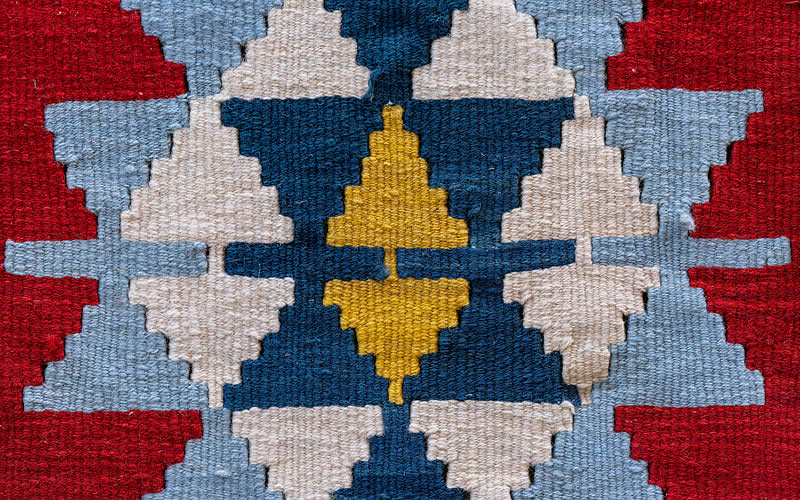
Our research looks at primary colours across every kind of creative and cultural expression we can trace them in: textiles and carpets, pottery and porcelain, painting, manuscripts, flags, and religious and ceremonial objects. Sources include museum and archival collections, art-historical and archaeological scholarship, and historical legal and court records — including sumptuary laws, the regulations many societies used to decide, who was permitted to wear or use which colours.
We also look beyond material culture, into spirituality, religion, cosmology, and social structure — since in most of the traditions we study, colour was never only decorative. It marked rank, carried cosmic or spiritual meaning, or organised a worldview.
The approach is comparative and still evolving. We follow one region’s use of primary colour to see where it echoes, diverges from, or was directly influenced by another’s — and we expect the picture to keep changing as we, or other researchers, uncover new material. That openness is part of the method: this is an active, ongoing research trail, not a fixed conclusion.
Colour as Power: A Case Study from Ancient China
One of the clearest examples we’ve found of colour organising an entire society comes from ancient China. Under the Wuxing and Wuse (“five elements, five colours”) system, five pure, saturated colours — qing (blue-green), chi (red), huang (yellow), bai (white), and hei (black) — were considered zhengse, the orthodox or “correct” colours, each linked to a cardinal direction and one of the five elements. These pure colours symbolised cosmic balance and were largely restricted to nobility and officials; yellow, in particular, eventually became reserved for the Emperor alone. Diluted, mixed, or undyed tones — jiansheng — were considered inferior and were what ordinary labourers, farmers, and servants wore, typically in dull whites, greys, browns, or muted shades.
This wasn’t unique to China in principle — Rome and Byzantium restricted Tyrian purple to emperors and the highest ranks, and Japan’s later kinjiki (“forbidden colours”) system, explicitly modelled on Chinese precedent, reserved certain hues for the imperial court. What does set the Chinese system apart, as far as our research has found, is its scale and structure: rather than one prestige colour, it built an entire five-colour cosmology — tying rank, direction, element, and moral order into a single visual system that shaped clothing across the whole of society, not just at the very top.
We’re gathering visual documentation of this — including court paintings that show the contrast directly, such as depictions of Chinese royal or noble women in pure primary-colour robes attended by servants in muted pastel tones. Where we use historical artworks or museum images on this site, we credit the museum or collection and confirm the image’s rights status before publishing, since a painting’s age doesn’t always mean the specific photograph or scan of it is free to reuse.
From Ancient Craft to Contemporary Practice
Historical research is only half the framework. We are equally interested in how contemporary artists respond to, reinterpret, and continue this same colour tradition today — including cases with no direct historical link, such as the Netherlands’ De Stijl movement, where Mondrian arrived at primary colours through an entirely different route, influenced in part by Theosophist Madame Blavatsky’s writing on colour and the chakras. Tracing both the connected and the unconnected paths to primary colour is part of what makes the comparison worthwhile.
Why This Research Matters: Culture as a Missing Pillar
Culture is not yet one of the UN’s 17 Sustainable Development Goals. A growing coalition of cultural organisations and networks — including advocacy connected to UNESCO’s MONDIACULT process — has argued for a dedicated culture goal for the post-2030 development agenda, sometimes informally referred to as “SDG 18.” No such goal has been formally adopted, but the direction of travel is clear: culture, arts, and international cultural relations are increasingly recognised as central to sustainable development rather than decorative to it.
RYB’s research sits inside that same argument, from a specific angle: that the shared history behind something as simple as three colours can be a practical tool for improving international relations between countries, not only a subject for museums. Our Data Revolution and country profiles track the same 193 UN member states this research is ultimately meant to serve.
How This Research Feeds Our Projects
Findings from this research inform all three of our operational pillars: the Red Yellow Blue Silk Road archive itself, our Creative Cities for Culture of Peace work, and the cultural framing behind Culture Women’s Days. It also directly shapes the design of our touring exhibition, where historical research becomes physical, visible experience.
Researchers, curators, and institutions working on related material are welcome to get in touch.