

Singapore - Global Development
SG
Explore Singapore, national progress, key indicators, challenges, policies and data supporting sustainable development.

Republic of Singapore
Republik Singapura (Malay)
சிங்கப்பூர் குடியரசு (Tamil)
Ciṅkappūr Kuṭiyaracu
新加坡共和国 (Chinese)
Xīnjiāpō Gònghéguó
Population
6,011,000 (2025)
This number includes 3.66 million citizens, 540,000 permanent residents, and 1.91 million non-residents.
Capital: Singapore
Internet country code: .sg
Government
Official website: gov.sg
Singapore Tourism Board: stb.gov.sg
Singapore Department of Statistics: singstat.gov.sg
Background
The Island That Refused to Disappear
Long before skyscrapers claimed its skyline, a Malay trading port named Temasek thrived here. By the 14th century, merchants from across Asia anchored their ships in these waters. Spices, porcelain, and stories changed hands on these shores. Then history turned cruel. The settlement burned in the 17th century. It slipped into obscurity. For decades, the island slept.
But geography does not forget. In 1819, the British arrived. They saw what the old traders had seen. A natural harbour. A crossroads. They planted a flag and built a colony. Modern Singapore rose from the ashes of Temasek.
The Long Walk to Self-Rule
Colonial rule stretched for more than a century. Then, in 1959, the tide shifted. Singapore gained full internal self-government. The British kept defense and foreign affairs. Everything else belonged to the island’s people.
In 1963, Singapore joined the Malaysian Federation. The marriage lasted two years. Then came the ouster. In 1965, Singapore stood alone. Independent. Tiny. Surrounded by uncertainty.
Many nations would have stumbled. Singapore sprinted.
An Unlikely Miracle
Today, Singapore ranks among the world’s most prosperous countries. Its per capita GDP sits among the highest globally. Container ships still fill its harbour, just as they did in Temasek’s time. But now they carry semiconductors, pharmaceuticals, and digital capital. The trading instinct never left. It simply evolved.
The People’s Action Party has shaped this journey. It has won every general election since the colonial era ended. Consistent economic growth built its foundation. A fragmented opposition and electoral structures that favor the ruling party cemented its hold.
The Singapore Paradox
This is a city-state of contradictions. Ancient port and futuristic hub. Colonial inheritance and postcolonial ambition. Strict governance and global openness.
For development professionals, Singapore offers a masterclass in economic transformation. It also raises enduring questions. Can prosperity sustain without political competition? Does growth alone define success?
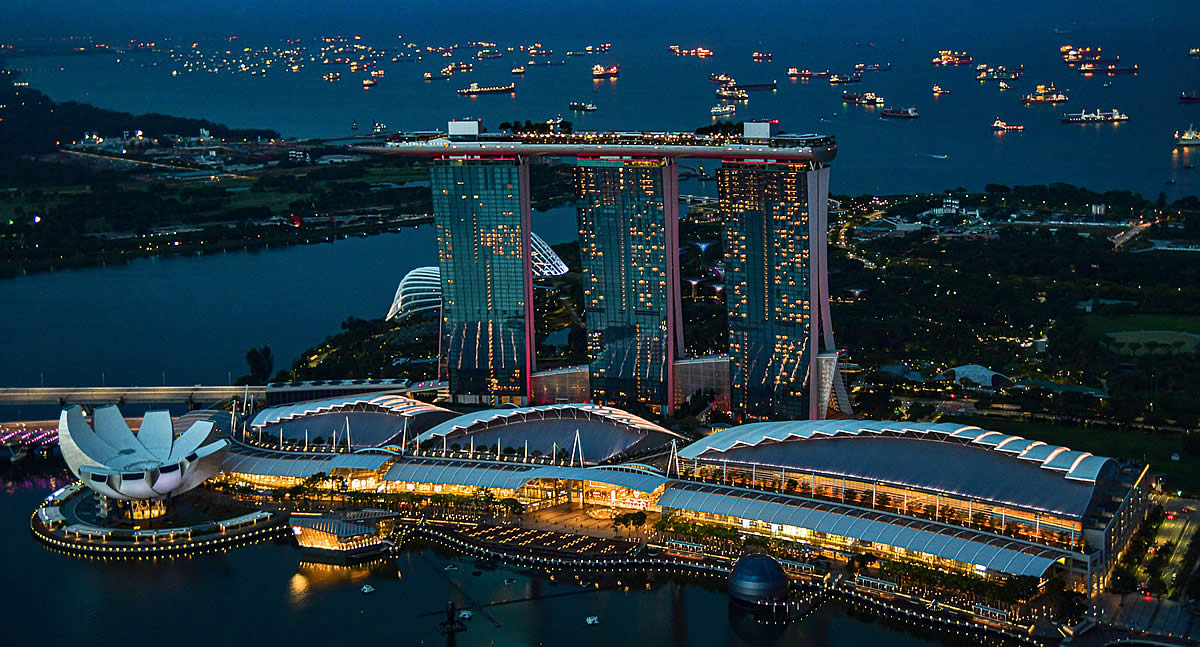
The island that once burned and vanished now shapes global finance, technology, and trade. From Temasek’s wooden jetties to Marina Bay’s glass towers, Singapore keeps reinventing itself. The question is what comes next.