

The Silk Road in the Netherlands: The Global Marketplace
Table of Contents
Situated at the crossroads of European maritime lanes and overland trade networks, the Netherlands developed into the world’s premier market for textile distribution and dye processing during the 17th century. Centered in Amsterdam, this national archive documents how Dutch trade guilds and agricultural innovations shaped the global flow of primary colour pigments and raw textile materials.
Silk Road
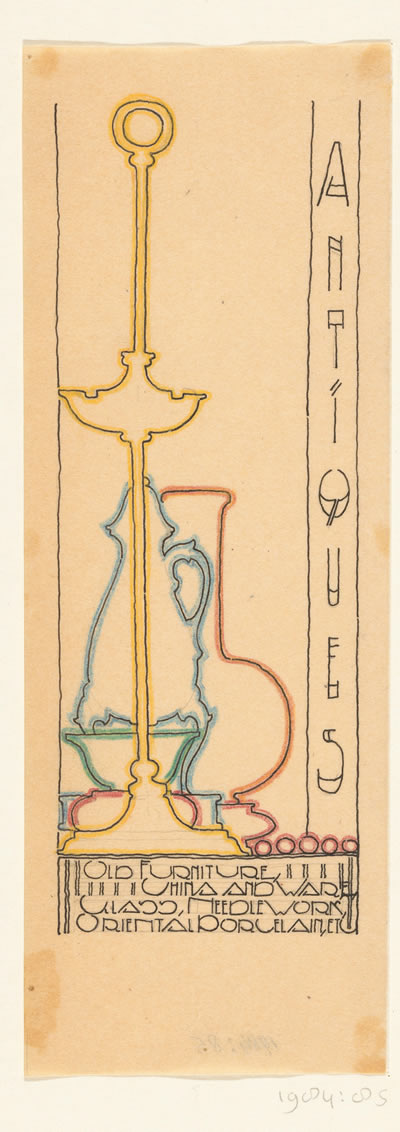
Antiques, old furniture, china and ware, oriental porcelain etc (original title on object), draftsman (artist): Reijer Stolk, Dating 1906 - 1945
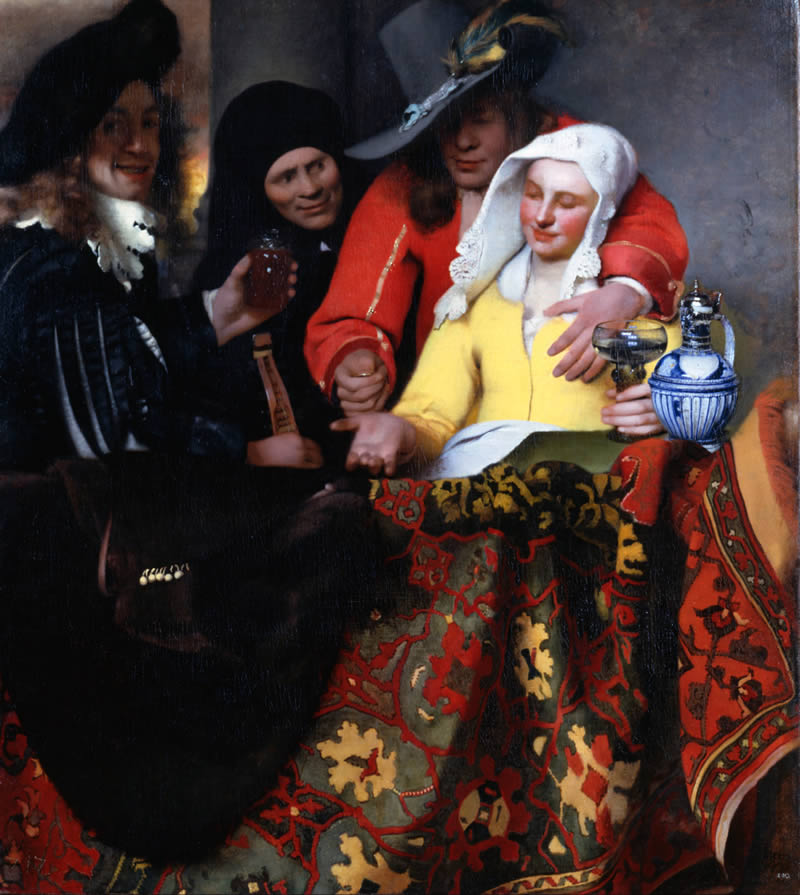
The Procuress (1656). Johannes Vermeer. Oil on canvas, 143 × 130 cm
The Heritage of Red, Yellow & Blue in Dutch Material History
In the Dutch Republic, primary colours evolved to reflect a unique balance between Calvinist restraint, civic pride, and global mercantile wealth:
- Primary Red (Meekrap Rood): Extracted from the roots of the madder plant, this rich red was a symbol of high-quality Dutch industrial processing. It adorned the flags, civic guard uniforms, and luxury woolens traded across the North Sea.
- Primary Yellow (Wouw Geel): Derived from wild weld flowers, yellow represented natural vitality and was systematically used by Dutch weavers to create standard base coats for green textiles and tapestries.
- Primary Blue (Wede Blauw & Indigo): Historically starting with European woad (wede), blue became an economic powerhouse when the Dutch began importing premium Indigofera tinctoria from Asia, establishing Amsterdam as Europe’s central indigo processing hub.
Researchers looking to study how these historical color systems are being re-evaluated inside modern circular urban economies can explore the Waag Futurelab Local Color Amsterdam Project.
Material Innovations: Zeeland Madder and Amsterdam Indigo Vats
Long before the creation of synthetic dyes, the Dutch Republic was internationally renowned for producing the most reliable, colourfast primary pigments in the Western world:
- The Excellence of Dutch Madder: The loose, sandy soil of Zeeland and Flanders perfectly matched the biological needs of the madder plant (Rubia tinctorum). The Dutch built highly specialized, horse-powered processing factories called meestoof structures to dry, grind, and grade the roots into globally coveted red powders.
- The Shift to True Indigo: While early European blue relied on woad, the establishment of global trade links saw the United East India Company (VOC) import massive quantities of highly concentrated Asian indigo. Amsterdam artisans built specialized vats to ferment this deep blue, outcompeting traditional European woad guilds.
For an exhaustive technical breakdown of the historic cultivation steps and mill designs used by Dutch master dyers, scholars can consult A Madder History via The Natural Dye Store Archive.
The Global Warehouse: Amsterdam’s Textile Trade
During the 17th and 18th centuries, Amsterdam acted as a porous global warehouse. Raw silks, Chinese damasks, Indian chintz, and European wools flowed directly through the city’s canals to be dyed, finished, stamped, and redistributed worldwide. This massive network created a shared global material vocabulary, permanently altering clothing traditions from Europe to Asia.
For extensive digital datasets, archival transcripts, and research tracking the precise volume of garments traded during this era, scholars should access these open databases:
- Primary Academic Database: Analyze the shipping manifests, fabric catalogs, and archival inventory numbers within The Dutch Textile Trade Project.
- Digital Humanities Research: Read the comprehensive analysis of international fabric circulation published in the Journal of Historians of Netherlandish Art.
- Institutional Framework: Explore how historical maritime trading networks are mapped within the UNESCO Silk Roads Programme for the Netherlands.
- Institutional Representation: Explore our ongoing work in European fashion governance, diplomacy, and industrial circularity on the official EFC Netherlands Delegation Profile.
Vexillology and Heraldry: The Global Journey of Dutch Flag Colors
While the design of national and regional flags is traditionally rooted in European noble ancestry and domestic political shifts, the physical creation of their colours relies heavily on historical material trade. The iconic red, yellow, and blue hues seen across Dutch vexillology mirror the precise raw commodities that traversed maritime networks and early global manufacturing lines.
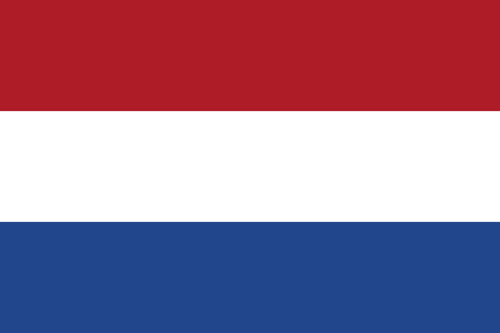
Flag of the Netherlands
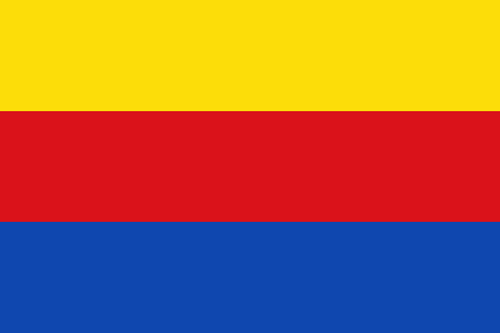
Flag of North Holland
- The Dutch National Tricolour: Emerging during the 16th-century Dutch Revolt as the Orange-White-Blue Prinsenvlag, the top band permanently shifted to red by 1660 to form the Statenvlag. This transition was driven by the superior chemical stability of red dyes over orange when exposed to harsh maritime sea winds, making it the oldest continuous national tricolour in the world and the direct structural inspiration behind the vertical French flag.
- The Provincial Flag of North Holland: Formally combining the ancient medieval heraldic coats of arms of the County of Holland and West Friesland, this regional flag features horizontal bands of yellow, red, and blue. It directly showcases the Lion of Holland—a rampant red lion with blue claws standing on a field of pure gold—preserving local sovereign identity through the primary triad.
For an exhaustive deep dive into the political timeline, maritime usage, and legislative history of the national tricolour, researchers can access the complete Dutch Flag Historical Archive on Wikipedia.
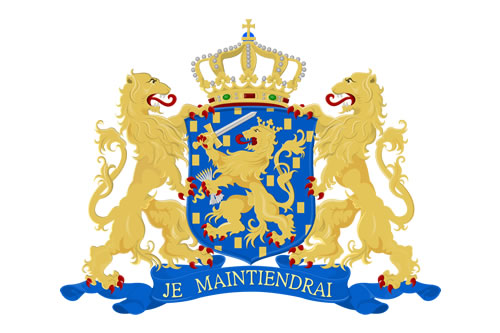
Seal of the Netherlands
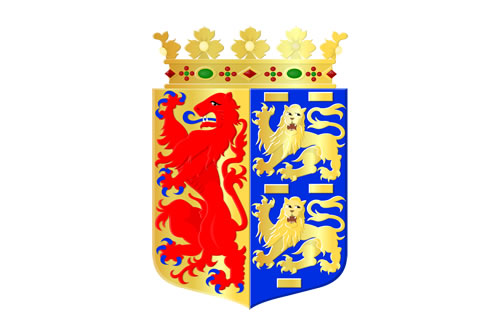
Seal of North Holland
The Material Link: Dye Channels and Cross-Cultural Design
The stabilization of these flag pigments across Europe reflects a deep material reliance on trans-continental trading paths. The striking cobalt blues and rich vermilions utilized by local textile guilds became scalable industries only because the United East India Company (VOC) imported high-purity Asian indigo blocks and raw mordants, turning Amsterdam into Europe’s central laboratory for colour processing.
Scholars interested in studying the broader cultural dimensions, ancient origins, and ancestral heraldry that shaped the province of North Holland can explore the official Provincial Flag Registry on Wikipedia.
The Modern Evolution: From Raw Pigments to Neo-Plasticism
The mastery of primary colour production built by Dutch trade guilds did not fade away; it evolved. In the early 20th century, the radical De Stijl movement repurposed these foundational shades to express a purely spiritual reality. Discover how this material legacy shifted from industrial dye factories to abstract grids in our deep-dive study on De Stijl and Mondrian: The Netherlands Primary Colour Revolution.
← Return to Master Hub:
The Red Yellow Blue Silk Road Project