
The UN Development Agenda
The UN development agenda sets shared global goals for ending poverty and protecting the planet. Unlike human rights law, it carries no binding legal force. States commit voluntarily, summit by summit.
UN
A Voluntary Agenda, Not a Binding Treaty
The 2030 Agenda for Sustainable Development makes this status explicit. It represents a voluntary commitment by states, not a legally binding framework. Still, its goals connect closely to rights already guaranteed under binding law.
This voluntary status sets the development agenda apart from the UN’s human rights law track. The two reinforce each other, but they run through different institutions and carry different legal weight.
Five Decades of Building This Agenda
The current SDGs sit at the end of a long line of summits and declarations.
Agenda 21 (1992) came first. Adopted at the Rio Earth Summit, it set out a comprehensive plan for sustainable development across social, economic, and environmental areas.
The Millennium Declaration and MDGs (2000) followed. World leaders agreed to eight measurable goals, from halving extreme poverty to achieving universal primary education, by 2015.
The Johannesburg Plan (2002) reinforced this work. It built on Agenda 21 and the Millennium Declaration, adding more focus on multilateral partnerships.
“The Future We Want” (2012) marked the turning point. At Rio+20, member states decided to develop a new set of goals to build on the MDGs and replace them after 2015.
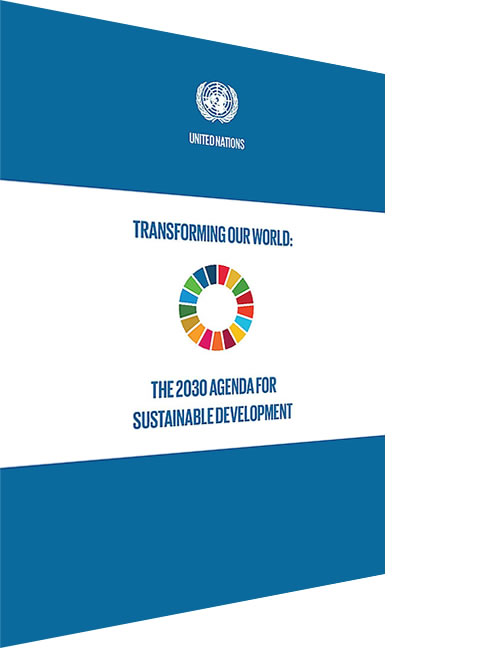
The 2030 Agenda and SDGs (2015) arrived next. World leaders adopted 17 goals and 169 targets, expanding the MDGs’ scope to cover all countries, not just developing ones.
→ Explore the SDGs
Companion Agreements From 2015
Three other major agreements arrived alongside the SDGs that same year. The Addis Ababa Action Agenda set out how to finance sustainable development. The Paris Agreement committed nations to climate action. The Sendai Framework focused on disaster risk reduction.
Together, these four 2015 agreements form the backbone of the current development agenda.
A Possible 18th Goal: Culture
Culture may join the SDGs after 2030. The push has grown since 2022, when UNESCO’s MONDIACULT conference first called culture a global public good.
At MONDIACULT 2025 in Barcelona, more than 100 ministers of culture adopted a declaration calling for culture as a standalone goal. This goal is often referred to as SDG 18.
This goal is proposed, not yet adopted. Its draft indicators are still being refined. The real decision point comes at the 2027 SDG Summit, where member states will negotiate the next development agenda.
→ Read more on RYB’s SDG 18 page.
RYB’s Place in This Picture
RYB tracks this agenda, because it shapes how the world measures progress on peace and development. SDG 18 matters most to us, since it would formally recognize culture’s role in building lasting peace.
Looking Forward
Watch the 2027 SDG Summit closely. It will decide whether culture becomes a standalone goal, or stays folded into the existing 17. RYB will track this debate as it unfolds.
Sources
- Transforming our world: the 2030 Agenda for Sustainable Development, UN DESA — sdgs.un.org/2030agenda
- THE 17 GOALS, Sustainable Development Goals — sdgs.un.org/goals
- Agenda 21, UN DESA — sdgs.un.org/publications/agenda21
- Does sustainable development need human rights?, SDG Watch Europe — sdgwatcheurope.org/does-sustainable-development-need-human-rights
- A Realistic Goal? Culture in the Sustainable Development Agenda, UN Chronicle — un.org/en/un-chronicle/realistic-goal-culture-sustainable-development-agenda
- Creatives unite: MONDIACULT Ministers adopted Declaration for Culture as a Sustainable Development Goal — creativesunite.eu/article/mondiacult-ministers-adopted-declaration-for-culture-as-a-sustainable-development-goal