

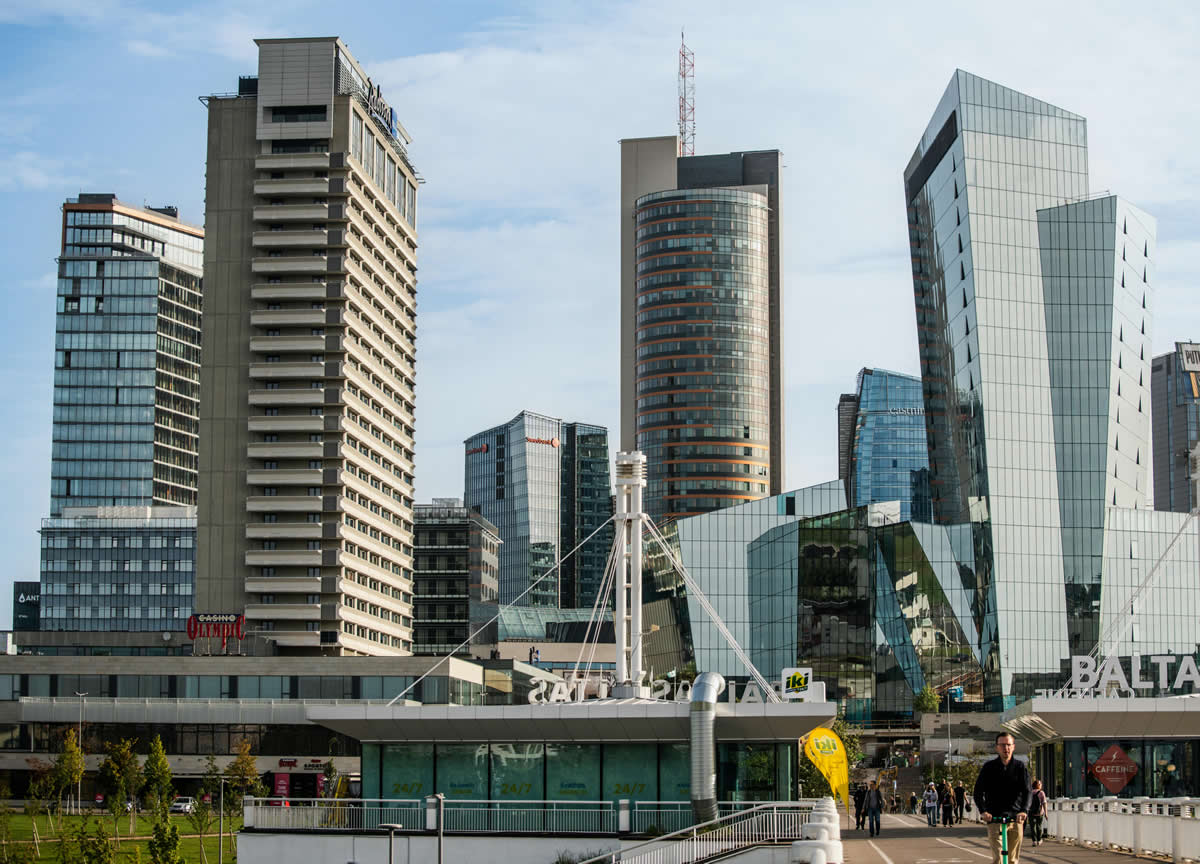
Lithuania’s path to global development began with independence restoration. On March 11, 1990, the country became the first Soviet republic to declare independence. This bold move triggered a wave across Eastern Europe.
The Supreme Council voted unanimously to reestablish independence. Moreover, this decision faced immediate Soviet opposition. President Mikhail Gorbachev declared it illegal and imposed economic sanctions.
However, Lithuanians persisted. On January 13, 1991, Soviet troops stormed Vilnius, killing 14 people. Nevertheless, the nation stood firm. Following the failed Moscow coup in August 1991, international recognition followed swiftly.
Lithuania joined key international organizations rapidly. It became a UN member on September 18, 1991. Subsequently, NATO membership came on March 29, 2004. The same year, on May 1, Lithuania joined the European Union.
Lithuania’s economy grew by 2.7% in 2024, exceeding peer countries’ performance. Furthermore, real GDP is expected to grow by 2.8% in 2025 and 3.1% in 2026.
Private consumption drives this growth. Rising wages and a favorable labor market support rapid income increases. Additionally, investment recovery through EU funds boosts economic activity.
The country’s per capita GNI reached significant levels. Consequently, Lithuania transformed from a post-Soviet economy to a modern EU state.
Unemployment remains below long-term averages despite recent economic challenges. However, demographic pressures loom. Natural population decline threatens future growth potential.
Wages continue rising substantially. Wage growth reached approximately 7.5% in 2025, gradually decelerating to 7% in 2026. These gains improve living standards significantly.
Lithuania’s tax system faces severe criticism. The country operates a schedular system where different income types face different tax rates. This creates major inefficiencies.
On the individual side, taxable incomes are classified in over 70 categories. Each category has its own tax schedule. Consequently, this encourages income shifting and creates inequities.
Firms face problematic incentives. Companies with revenue above €300,000 face much higher tax rates, discouraging growth and encouraging evasion. Therefore, businesses deliberately stay below this threshold.
Small companies pay 5% corporate tax. Standard companies pay 15%. In 2025, rates increased to 17% and 7% respectively.
Nevertheless, these remain among Europe’s lowest.
Recent tax reforms sparked intense debate. Economists warn that people may change behavior to avoid higher personal income tax. Additionally, professionals might relocate abroad.
Critics argue the reform could slow economic growth, discourage investment, and burden the middle class excessively. The government counters that defense spending requires increased revenue.
Dividend taxes potentially double from 15% to 27%. Self-employed individuals face similar increases. Business succession plans face disruption as new gift taxes affect family transfers.
Tax authorities intensify enforcement. Lithuania established task forces to combat aggressive tax planning and monitor high-net-worth individuals. Nevertheless, challenges persist.
The schedular system creates strong incentives for income shifting and inefficiencies. Furthermore, horizontal equity suffers as similar earners pay different amounts.
The general government deficit increased from 1.3% in 2024 to projected 2.3% in 2025. Public debt rises correspondingly. Debt reached 38.2% of GDP in 2024 and will reach 43.9% by 2026.
Aging costs pressure budgets significantly. Financing increasing ageing-related costs without endangering fiscal sustainability requires creating additional fiscal space. Therefore, spending efficiency improvements become critical.
Defense spending drives budget pressures. Lithuania allocates substantial resources to security. The country commits to spending 5-6% of GDP annually from 2026 to 2030.
The government plans to use loans as defense budget funding sources alongside economic growth. Additionally, Lithuania seeks EU fiscal flexibility for defense spending.
Lithuania rose to 25th globally in governance rankings in 2025 from 30th in 2021. This demonstrates significant improvement. Moreover, the country excels in long-term vision and adaptability indicators.
In Transparency International’s 2024 Corruption Perceptions Index, Lithuania ranked 12th in the EU and 32nd globally. Consequently, steady anti-corruption progress continues.
Lithuania implemented whistleblower protections early. The country was among the first to implement the Whistleblower Protection Directive. Furthermore, big data analytics help identify corruption risks.
Lithuania hosted the 21st International Anti-Corruption Conference in 2024, bringing together over 2,000 experts. This demonstrates global leadership commitment.
The country actively participates in European anti-corruption networks. Lithuania is a member of the European Partners Against Corruption and the European Anti-Corruption Network. These platforms facilitate shared approaches.
Lithuania provides development assistance to partner countries. In 2025, Lithuania focuses on effectiveness and strategic impact of its assistance. However, global development aid declined in 2024.
The country prioritizes Ukraine support. Lithuania funded reconstruction of an underground school shelter in Odesa serving 700 students. Additionally, rehabilitation center reconstruction continues in Brukhovychi.
The Lithuanian NGDO Platform coordinates development efforts. Established in 2007, it currently has 22 members working in development cooperation. The platform strengthens NGO networking and partnerships.
Member organizations work in democracy, human rights, education, health care, climate change, and gender equality. Furthermore, they represent Lithuanian NGOs in EU organizations.
Several organizations drive development work:
Ministry of Foreign Affairs – Manages official development assistance and bilateral programs.
Lithuanian Red Cross – Provides humanitarian aid and emergency response services.
Open Lithuania Foundation – Supports NGO capacity building and civil society development.
National Non-Governmental Development Cooperation Organisations’ Platform – Coordinates development cooperation activities.
Gross greenhouse gas emissions have hardly declined since 2000. Additionally, energy supply remains highly dependent on imports. These issues require urgent attention.
Carbon pricing increases gradually. Following recent amendments, excise duties on motor fuels increase over 2024-26, with new carbon taxes added. However, emissions reduction progress remains slow.
Renewable energy expansion continues. Nevertheless, fossil fuel dependence persists. Therefore, attracting private investment in renewables becomes critical.
Lietuvos bankas (Bank of Lithuania) – Manages monetary policy and economic projections under Chair Gediminas Šimkus.
State Tax Inspectorate – Investigates tax fraud and enforces compliance. Led efforts to combat aggressive tax planning.
Special Investigation Service (STT) – Lithuania’s anti-corruption agency. Develops big data analytics for corruption risk identification.
Vytautas Landsbergis – First parliamentary chair after independence declaration in 1990. Led the Sąjūdis movement.
Gintautas Paluckas – Prime Minister leading current tax reform and defense spending increases.
Dalia Grybauskaitė – First female president (2009-2019), focused on economic recovery and EU integration.
Tadas Povilauskas – SEB Bank economist warning about tax avoidance risks.
Marius Dubnikovas – Economist criticizing tax reform as short-sighted and investment-deterring.
Ernestas Einoris – Lithuanian Free Market Institute expert highlighting middle-class tax burden.
Lithuania stands at a crossroads. Economic growth continues, yet challenges mount simultaneously. Tax reform debates highlight tensions between defense needs and economic competitiveness.
Strong governance frameworks provide foundations for progress. NATO and EU memberships guarantee security and market access. Product market regulations and insolvency frameworks rank among the most conducive to productivity growth in the OECD.
Digital innovation and fintech sectors thrive. Lithuania attracts international talent and investment. The country’s agility and adaptability create competitive advantages.
Demographic decline requires urgent policy responses. Encouraging immigration at all skill levels becomes essential. Additionally, improving employability across age groups helps address labor shortages.
Tax system simplification must proceed. Broadening the tax base and encouraging formal economic activity can create fiscal space. However, maintaining competitiveness remains paramount.
Productivity growth requires sustained attention. Developing domestic capital markets and strengthening public integrity frameworks can support productivity. Furthermore, R&D spending and digital skills development prove crucial.
Lithuania must balance multiple objectives simultaneously. Defense spending increases strain budgets significantly. Yet security remains non-negotiable given regional threats.
Economic growth must continue supporting rising living standards. Meanwhile, fiscal sustainability requires careful management. The government faces difficult tradeoffs between immediate needs and long-term stability.
Climate commitments demand accelerated action. Renewable energy expansion needs private investment attraction. Additionally, emission reduction targets require stronger policies.
Lithuania demonstrates regional leadership potential. Anti-corruption progress sets positive examples. Development cooperation, especially supporting Ukraine, shows solidarity values.
The country’s voice matters in EU and NATO forums. Continued engagement strengthens Baltic cooperation. Furthermore, Nordic partnerships enhance policy learning opportunities.
Lithuania’s 35-year independence journey shows remarkable achievements. Nevertheless, significant challenges persist ahead. Success requires maintaining reform momentum while protecting economic competitiveness.
The nation’s resilience proved itself repeatedly throughout history. Today’s generation faces different but equally important tests. Balancing security, prosperity, and sustainability determines Lithuania’s future trajectory.
Smart policy choices today shape tomorrow’s possibilities. With continued focus on productivity, inclusion, and innovation, Lithuania can secure lasting prosperity. The journey continues, demanding wisdom, courage, and unity.

Population
2,655,755 (2023 est.)
2,711,566 (2021)
2,793,284 (2018)
Capital: Vilnius
Internet country code: .lt
Government
Official website: lrv.lt
President of the Republic of Lithuania: lrp.lt
State Department of Tourism: lithuania.travel
Statistics Lithuania: vda.lrv.lt
Lithuanian lands were united under MINDAUGAS in 1236; over the next century, through alliances and conquest, Lithuania extended its territory to include most of present-day Belarus and Ukraine. By the end of the 14th century Lithuania was the largest state in Europe. An alliance with Poland in 1386 led the two countries into a union through the person of a common ruler. In 1569, Lithuania and Poland formally united into a single dual state, the Polish-Lithuanian Commonwealth. This entity survived until 1795 when its remnants were partitioned by surrounding countries. Lithuania regained its independence following World War I but was annexed by the USSR in 1940 – an action never recognized by the US and many other countries. On 11 March 1990, Lithuania became the first of the Soviet republics to declare its independence, but Moscow did not recognize this proclamation until September of 1991 (following the abortive coup in Moscow). The last Russian troops withdrew in 1993. Lithuania subsequently restructured its economy for integration into Western European institutions; it joined both NATO and the EU in the spring of 2004. In January 2014, Lithuania assumed a nonpermanent seat on the UN Security Council for the 2014-15 term.
