


Women, Culture and Peace › Women’s Days for Culture of Peace › Calendar › Culture Women’s Day New Zealand › New Zealand
Women's Suffrage Day — Culture Women's Day New Zealand
Women's Right to Vote / September 19, (1893)
One of 193 national Women’s Days for Culture of Peace — a day for every UN member state. See the full calendar.
NZ
When did women get the right to vote in New Zealand?
New Zealand already has its own name and date for this: Women’s Suffrage Day, September 19, marking the anniversary of the 1893 Electoral Act. We lead with that name, alongside ours, Culture Women’s Day New Zealand, out of the same respect we show every country with its own established commemoration.
On September 19, 1893, Governor Lord Glasgow signed the Electoral Act into law, making New Zealand the first self-governing country in the world to grant all women the right to vote in parliamentary elections. What set New Zealand apart wasn’t just being first, it was being genuinely universal from the start: the law covered all women over 21 regardless of property, wealth, or race, including Māori women, who could vote in the Māori electorates on the same terms as Māori men. That made New Zealand the first country anywhere in which Indigenous women could vote, a distinction few other early-suffrage nations can claim; several extended the franchise to women while still restricting it by race.
The vote itself came with a limit worth naming: women could vote in 1893, but not stand for Parliament, a right withheld until 1919. The first woman wasn’t actually elected until 1933.
How did New Zealand women win the vote?
- 1840. Several high-ranking Māori women signed the Treaty of Waitangi, New Zealand’s founding document, reflecting the standing women already held in Māori society before colonization.
- 1852. The New Zealand Constitution Act restricted voting to male property owners, formally excluding women from politics under British colonial law.
- 1869. Mary Müller, writing under the pseudonym “Femina,” published “An Appeal to the Men of New Zealand,” becoming the first public advocate for women’s political rights in the colony.
- 1885. The Women’s Christian Temperance Union (WCTU) was established in New Zealand, and adopted suffrage as a core goal, reasoning that women voters would support temperance. It gave the movement its first real organizing infrastructure.
- 1887. Kate Sheppard was appointed Franchise Superintendent of the WCTU, and became the campaign’s central strategist and voice, later founding the “White Ribbon,” the first newspaper in New Zealand run entirely by women.
- 1891 and 1892. Suffragists submitted petitions to Parliament, growing from 9,000 signatures to 19,000. Both were defeated, but by narrowing margins each time.
- 1893. Meri Te Tai Mangakāhia addressed the Kotahitanga Māori Parliament, becoming the first woman to speak before it, and formally proposed that Māori women be granted the right to vote and to stand as members.
- 1893. A third petition gathered nearly 32,000 signatures, almost a quarter of the country’s adult European women, and was famously unrolled across the floor of Parliament when presented.
- August 11, 1893. The House of Representatives passed the Electoral Bill’s suffrage amendment, after Premier Richard Seddon, who privately opposed suffrage, attempted to use it to sink the bill entirely and misjudged the vote.
- September 8, 1893. The Legislative Council passed the bill by the narrowest possible margin, 20 votes to 18.
- September 19, 1893. Governor Lord Glasgow signed the Electoral Act into law.
- November 28, 1893. In the first election open to women, held just ten weeks later, roughly 109,000 women registered and about 90,000 voted, an 82% turnout, slightly higher than men’s.
- 1919. Women won the right to stand for Parliament, 26 years after winning the right to vote.
- 1933. Elizabeth McCombs became the first woman elected to Parliament, winning a by-election for the seat her late husband had held.
- 1972. The Equal Pay Act passed. Sex discrimination wasn’t formally prohibited by law until the Human Rights Commission Act of 1977.
- 1993. The suffrage centenary was marked nationally, and Kate Sheppard’s portrait appeared on New Zealand’s $10 note, where it remains today.
- 1997 and 2017. Jenny Shipley became the country’s first woman Prime Minister; two decades later, Jacinda Ardern was elected while pregnant, drawing global attention to the country’s political culture around gender.
- 2021. New Zealand’s Parliament reached full gender parity for the first time, 61 women to 60 men, before representation fell back after the 2023 election.
Key Women in the New Zealand Women’s Movement
Mary Müller (1819-1902)
Writing under the pseudonym “Femina” to protect herself from her husband’s disapproval, Müller published New Zealand’s first public argument for women’s suffrage in 1869, a quarter-century before the vote was won.
Kate Sheppard (1847-1934)
The campaign’s central strategist and most recognized leader, Sheppard organized the three mass petitions, founded the movement’s own newspaper, and framed suffrage as a matter of basic justice rather than temperance politics alone. Her portrait has appeared on New Zealand’s $10 note since 1993.
Meri Te Tai Mangakāhia (1868-1920)
The first woman to address the Kotahitanga Māori Parliament, Mangakāhia formally proposed in 1893 that Māori women be granted the right to both vote and stand as members, pushing the suffrage movement to reckon with Māori political structures on their own terms.
Elizabeth McCombs (1873-1935)
Forty years after the vote was won, McCombs became the first woman elected to New Zealand’s Parliament in 1933, closing the gap between suffrage and actual political representation that the 1893 Act had left open.
Jenny Shipley (1952- )
Shipley became New Zealand’s first woman Prime Minister in 1997, after replacing her predecessor mid-term, the first of what would become three female prime ministers in the country’s history.
Jacinda Ardern (1980- )
Elected Prime Minister in 2017 and serving through the country’s response to the COVID-19 pandemic and the 2019 Christchurch mosque attacks, Ardern, who gave birth while in office, became an internationally recognized symbol of New Zealand’s political culture around gender and leadership.
Why this day matters today
New Zealand still ranks near the very top of the world on gender equality, 5th of 148 countries on the World Economic Forum’s 2025 index, one of only two non-European economies in the global top 10. But the trend line, for the first time in years, points down rather than up. New Zealand held full parliamentary gender parity in 2021, 61 women to 60 men, and has since slipped: the 2023 election brought the number of women MPs down to 57, and parity in ministerial (cabinet) positions collapsed from 81.8% in 2023 to just 53.8% in 2025, with only 4 of 14 cabinet ministers currently women.
One figure bucks the trend in the other direction: New Zealand’s national gender pay gap sits at just 5.2% (2025), among the smallest gaps recorded anywhere in the world.
Explore current data at Gender Gap New Zealand.
Culture Women’s Day within Women, Culture and Peace
Culture Women’s Day New Zealand is part of a larger framework: Women, Culture and Peace (WCP). WCP builds on UNESCO’s Culture of Peace programme and the UN’s Women, Peace and Security agenda.
WCP works through culture, art, and community rather than formal institutions alone. It follows a women-centered organizing model, developed by scholars Stall and Stoecker, that builds relationships and shared leadership instead of competing for power, an approach the 1893 campaign itself embodied: petitions and persuasion rather than confrontation, a movement built door to door rather than from the top down.
Women’s Days for Culture of Peace marks a day for every UN member state, 193 in total. Each day recognizes a nation’s path toward women’s political voice, and opens space to reflect on peacebuilding, gender equality, and the work still ahead.
What could Culture Women’s Day New Zealand become?
New Zealand doesn’t need a new tradition here, Women’s Suffrage Day is already marked nationally each September 19, with schools teaching the story and public figures marking the date. What Culture Women’s Day New Zealand adds is a wider lens: connecting that established date to 192 other countries doing the same on their own, many of which looked to New Zealand’s example when building their own campaigns.
It could become the day New Zealanders revisit not just 1893, but 1919 and 1933, the years that turned the right to vote into the right to actually govern. It could become an occasion to learn the fuller cast of the story, Meri Te Tai Mangakāhia alongside Kate Sheppard. It could become a small, yearly habit of attention, a pause that returns each September 19, and a moment to notice which way the current numbers are actually trending.
Ideas for celebration and reflection
These are starting points, not a program. Pick what resonates. Leave the rest. Add your own.
- Online. A short post or story marking the day, using #CultureWomensDay or #WCP, linked to the wider calendar of 193 days.
- In schools. A classroom discussion tracing the line from Mary Müller’s 1869 pamphlet through the 1893 petitions to the vote itself, and on to 1919 and 1933.
- In culture. A visit, in person or online, to the Kate Sheppard National Memorial in Christchurch, which incorporates names from the original 1893 petition.
- In organizations. A pause during a team meeting to mark the day and connect it to New Zealand’s current ministerial and parliamentary representation data.
- At home or with friends. A conversation about what political voice has meant across generations of your own family.
- In communities. A local reading or discussion group connecting the 1893 campaign’s methods, petitions, persuasion, patient organizing, to causes people care about today.
Some of these need an afternoon. Others need only a sentence shared with a colleague. Both matter.
A growing network, one country at a time
New Zealand carries particular weight in this network: the first country in the world to grant women the vote, a milestone suffragists in Britain, the United States, and Australia explicitly cited in building their own campaigns. As New Zealanders shape what Culture Women’s Day means here, that founding role adds something distinct to a calendar spanning 193 countries, most of which, in one way or another, followed where New Zealand led first.
Looking Forward
Culture Women’s Day New Zealand marks September 19, 1893, the day a small, remote colony did something no self-governing nation had done before, and did it more completely than most who followed, extending the vote to Māori women on the same terms as everyone else, decades before other countries closed similar gaps.
That founding achievement doesn’t make the story finished. A country that once reached full parliamentary parity is currently moving away from it, not toward it, a reminder that gains in gender equality, even where they’re won first, still have to be actively held onto rather than assumed permanent.
The invitation stands open. Explore the Women, Culture and Peace framework, browse the calendar of 193 national days, and mark September 19 as Women’s Suffrage Day, Culture Women’s Day New Zealand, or both.
Sources and Links
- Women and the Vote — New Zealand History, Ministry for Culture and Heritage | nzhistory.govt.nz
- Kate Sheppard — New Zealand History | nzhistory.govt.nz
- Meri Te Tai Mangakāhia — New Zealand History | nzhistory.govt.nz
- New Zealand’s Gender Pay Gap — Ministry for Women | women.govt.nz
- Gender Equality: New Zealand Drops in Global Ranking for the First Time in Four Years — New Zealand Herald | nzherald.co.nz
- New Zealand Falls in Latest Global Gender Equality Rankings — RNZ | rnz.co.nz
- Global Gender Gap Report 2025 — World Economic Forum | weforum.org
- Constitution of New Zealand, 1840 as amended to 2023 — UN Women Constitutions Database | constitutions.unwomen.org
- Women’s Leadership and Political Participation: Facts and Figures — UN Women | unwomen.org
- Gender Gap New Zealand — RYB Global Development | redyellowblue.org/data/nz/gender-gap/
- Women, Culture and Peace (WCP) — RYB Global Development | redyellowblue.org/women-culture-and-peace/
- Calendar of Women’s Days for a Culture of Peace — RYB Global Development | redyellowblue.org/womens-days-for-culture-of-peace/calendar/
- New Zealand — Global Development — RYB Global Development | redyellowblue.org/data/nz/
Women’s Suffrage Day New Zealand / $10 banknote / Commemorating the Achievement
New Zealand has preserved and celebrated its suffrage heritage through various commemorations. The centenary in 1993 marked a major national celebration, with events throughout the country highlighting the achievement and its ongoing significance. New memorials were dedicated, historical exhibitions educated the public about the suffrage movement, and the occasion prompted reflection on continuing gender equality challenges.
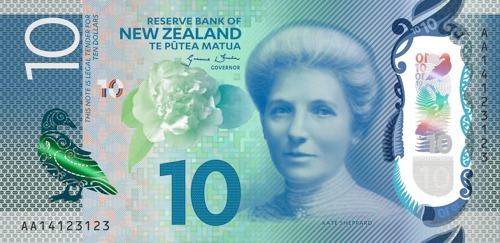
Kate Sheppard’s image appears on the New Zealand $10 note since 1993, which marked 100 years since the women’s suffrage bill was passed, making her one of the few non-royal women to be featured on currency worldwide. The Kate Sheppard Memorial in Christchurch incorporates the names from the 1893 petition, literally etching the grassroots nature of the movement into public memory. Suffrage Square in Auckland and the Women’s Suffrage Memorial in Wellington similarly honor the achievement. September 19 is officially designated as Women’s Suffrage Day, with annual celebrations marking the anniversary.
These commemorations serve not only to honor the past but to connect historical struggles to ongoing efforts for gender equality. Schools throughout New Zealand incorporate the suffrage story into their curricula, ensuring new generations understand this foundational chapter in their national history. Political leaders often use the occasion of Suffrage Day to announce new gender equality initiatives, drawing explicit connections between historical achievement and contemporary challenges.
The preservation of historical sites associated with the suffrage movement further maintains this connection to the past. Kate Sheppard’s home in Christchurch has been preserved as a historic site, allowing visitors to connect with the physical spaces where the movement was organized. Archives maintain the actual petition documents, correspondence between suffragists, and other primary materials that document this historical achievement.
Women’s Right to Vote in New Zealand: Pioneering Global Suffrage
September 19, 1893, stands as a watershed moment not only in New Zealand’s history but in the global advancement of democratic rights. By becoming the first self-governing nation to grant women the right to vote, New Zealand established itself as a pioneer in political equality and set an example that would inspire suffrage movements worldwide. This achievement resulted from a combination of persistent activism, strategic political alliances, and a reformist political climate that made New Zealand receptive to democratic innovation.
From Kate Sheppard‘s steady leadership to the thousands of women who signed petitions, from parliamentary allies like Sir John Hall to Māori advocates like Meri Te Tai Mangakāhia, the suffrage victory represented a collective achievement that crossed lines of class, ethnicity, and faith. The inclusive nature of this suffrage—extending to indigenous Māori women as well as European settlers—further distinguished New Zealand’s achievement as particularly progressive for its era.
The legacy of that September day in 1893 remains visible in contemporary New Zealand—from Kate Sheppard’s image on the $10 note to the country’s track record of women serving in the highest political offices. Yet perhaps the most profound legacy is the principle established: that democracy functions best when it includes all adult citizens, regardless of gender. This principle, revolutionary in 1893, continues to inspire efforts for political equality worldwide.
As Kate Sheppard herself wrote in the aftermath of the victory: “The news is being received with great joy by the women all over the country… All we need is to continue to be what we have been, each woman doing her best to use this power in the wisest way she knows.” Her words capture both the historical significance of the achievement and its enduring challenge—to use political power wisely in the ongoing pursuit of a more just and equal society.
Helen Clark and Jacinda Ardern in Conversation about Gender Equality
Dec 21, 2020 – A conversation between Jacinda Ardern and Helen Clark about gender equality, recorded by UN Women National Committee Aotearoa New Zealand.