

The New Silk Road: Map of Corridors, Strategic Goals, and Global Trade Impact
Table of Contents
The New Silk Road, formally launched by China in 2013 as the Belt and Road Initiative (BRI), represents a multi-trillion-dollar infrastructure and economic development strategy designed to recreate the historical trans-Eurasian trade routes. Spanning overland corridors (the “Belt”) and maritime shipping pathways (the “Road”), this massive logistical web connects Asia, Europe, Africa, and South America to reshape global supply chains. As geopolitical conflicts disrupt established routes, the infrastructure of the New Silk Road has evolved rapidly, shifting trade volumes across distinct, highly competitive transit corridors.

Silk Road
Strategic Goals of the New Silk Road
China’s deployment of the BRI serves both domestic economic rebalancing and international integration efforts. According to research on The New Silk Roads of Energy, a fundamental domestic goal is to revitalize China’s inland western provinces, such as the Xinjiang region, turning them into major energy hubs and logistics gateways for resources flowing from Central Asia. Internationally, the initiative aims to build resilient infrastructure, reduce intercontinental shipping transit times, open alternative supply pathways that bypass congested geopolitical chokepoints, and foster deep economic dependencies through heavy investment in developing markets.
The Key Transit Corridors
The overland logistics network is divided into several main corridors, each experiencing drastically different traffic dynamics due to changing international relations.
1. The Northern Corridor (Trans-Siberian Freight)
Utilizing the vast rail systems of the Russian Federation and Belarus, the Northern Corridor historically moved the vast majority of overland container traffic from central Chinese manufacturing hubs directly into Germany and Poland. This land bridge slashed freight transit times compared to ocean travel. However, following the 2022 escalation of the Russo-Ukrainian war, Western sanctions and ethical re-evaluations by European firms caused European freight traffic along this route to drop significantly.
2. The Middle Corridor (Trans-Caspian Route)
As the Northern Corridor faced disruption, the Trans-Caspian International Transport Route (TITR), known as the Middle Corridor, surged in importance. This route bypasses Russia entirely, tracking westward from China across Kazakhstan by rail to the Caspian Sea ports of Aktau and Kuryk. Freight is transferred via maritime ferries to Azerbaijan and Georgia, eventually moving into Turkey and the European Union. Analysis from The Times of Central Asia notes that the Middle Corridor is approximately 3,000 km shorter than the Northern Corridor, offering a highly strategic, dispute-free alternative to both Russian soil and volatile maritime pathways in the Red Sea.
3. The Polar Silk Road (Arctic Shipping)
Accelerated by Arctic ice melt and geopolitical realignments, Russia and China have collaborated closely on the Polar Silk Road. Running along Russia’s northern coast through the Northeast Passage, this maritime route cuts shipping times between East Asian ports and Northern Europe nearly in half compared to traditional routing via the Suez Canal, while securing transit fees for Moscow and long-term energy supplies for Beijing.
4. The China-Iran Railway Interconnection
A crucial branch of the New Eurasian Land Bridge network is the direct rail line linking China to Iran. Running from western China through Kazakhstan, Turkmenistan, and across the Iranian border, this 10,000-kilometer rail corridor integrates the Middle East directly into the silk network. The link allows freight trains to transport industrial components and consumer goods—such as electronics and solar panels—directly from Chinese factories to Tehran in roughly 12 to 15 days. On the return route, the trains carry Iranian mineral commodities, bitumen, and petrochemical products, providing a vital overland alternative to maritime lanes that avoids shipping vulnerabilities through oceanic straits.
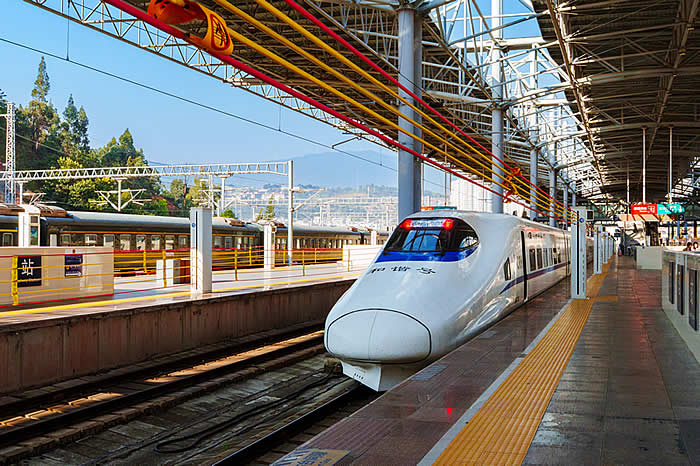
Timeline of Progress: The Evolution of the New Silk Road (2013–2026)
Since its launch, the Belt and Road Initiative has transformed from a regional infrastructure proposal into the world’s largest transnational development network. Over the past decade, its total cumulative engagement has surpassed $1.3 trillion. The following chronological milestones highlight the initiative’s major structural and strategic shifts:
- 2013 – The Launch: Chinese President Xi Jinping officially announces the “Silk Road Economic Belt” during a speech in Kazakhstan, followed shortly by the “21st Century Maritime Silk Road” in Indonesia, laying the groundwork for the modern BRI.
- 2014 to 2015 – Building Financial Engines: China establishes the $40 billion Silk Road Fund to finance connectivity projects. In late 2015, the Beijing-backed Asian Infrastructure Investment Bank (AIIB) formally launches with 57 founding countries, creating a multilateral alternative to Western financial institutions.
- 2016 – The Uzbekistan Railway Milestone: Highlighting Central Asian integration, China and Uzbekistan inaugurate the Kamchiq Tunnel, completing a vital mountainous link along the New Eurasian Land Bridge. Bilateral relations are upgraded, marking the transition from planning to active, large-scale execution.
- 2017 to 2019 – Institutionalization and “Green” Refocus: The first Belt and Road Forums are hosted in Beijing. Facing international scrutiny over the debt burdens of mega-projects, China introduces the “Green Silk Road” and “Digital Silk Road,” shifting priorities toward renewable energy infrastructure and digital technology connectivity.
- 2020 to 2021 – Pandemic and Port Realignments: Despite global supply chain freezes during the COVID-19 pandemic, overland freight rail demand spikes as ocean shipping faces massive bottlenecks. Countries like Ukraine officially sign major cooperation pacts to position themselves as direct trade gateways into the European Union.
- 2022 to 2023 – Geopolitical Fracture and the Middle Corridor: The escalation of the Russo-Ukrainian war severely disrupts the Northern Rail Corridor running through Russia. Global logistics firms aggressively shift container volume to the Trans-Caspian “Middle Corridor.” Concurrently, the BRI hits its 10-year anniversary with over 150 participating nations.
- 2024 – Historic Spending Surge: Driven by massive resource, manufacturing, and transport demands, the BRI records unprecedented growth. Annual construction contracts reach $70.7 billion, while infrastructure investments hit $51 billion, marking a significant 31% year-on-year increase in total engagement.
- 2025 – The Highest Engagement Ever: Defying broader global economic slowdowns, total BRI engagement peaks at a record high. Annual construction contracts skyrocket by 81% to reach $128.4 billion—deeply anchored by major energy, mining, and transport developments across Africa and the Middle East.
- 2026 – The Modern Transition: Under China’s 15th Five-Year Economic Plan, the New Silk Road transitions toward structural supply chain resilience. The initiative scales down speculative megadeals to focus on technology integration—leveraging the “New Three” industries (Electric Vehicles, advanced batteries, and solar technology)—alongside the rapid expansion of the Arctic “Polar Silk Road” and satellite-backed “Space Silk Road” connectivity.
Global Trade Data and Logistics Context
While ocean freight remains the dominant method for transporting bulk global trade due to sheer volume capabilities, the New Silk Road’s land bridges carve out a high-utility niche. Intermodal rail corridors offer significant financial and time-saving advantages for specific high-value cargoes where maritime transit is too slow and air cargo is cost-prohibitive. Intermodal corridors like the Middle Corridor cut down transit times to 10–15 days, completely bypassing highly volatile chokepoints. Data indicates that the broader Belt and Road Initiative involves over 150 countries and is actively reshaping global trade lanes, stimulating over a hundred billion dollars in contract infrastructure allocations annually.
← Return to Master Hub:
The Red Yellow Blue Silk Road Project