

Imperial Yellow: How a Colour Became a Throne
Table of Contents
Where Western royalty reached for purple or gold, Chinese emperors monopolised yellow, and enforced that monopoly with the force of law. The story of how one colour became the exclusive property of the throne runs from a river’s silt to a dragon-roofed palace, and it begins not with politics, but with soil.
Silk Road
Yellow Before It Was Political
Chinese civilisation grew up along the Yellow River, Huang He, named for the vast quantities of yellow loess silt it carried downstream. For an agrarian society, this yellow earth was the literal source of fertility and survival. Where Western tradition tended to map yellow onto the distant sun, the Chinese conception of the colour stayed grounded in something closer at hand: the ground itself.
The Pivotal Centre
When Warring States and Han philosophers codified Wuxing cosmology into a map of five directions, four elements ringed the compass points. The fifth, Earth, sat at the centre, the stabilising axis the other four rotated around. Its colour was yellow. Because the centre held the whole system together, yellow came to represent not just one direction among five, but supreme neutrality and absolute orthodoxy itself. The full five-direction system is set out on our Wuse page.
The Yellow Emperor
To anchor this cosmic centre in myth, ancient texts elevated Huangdi, the Yellow Emperor, worshipped as the mythical founder of Chinese civilisation and represented cosmologically as the Yellow Dragon of the Centre. The link runs deeper than symbolism. The character for yellow, Huang (黃), is a near-homophone of the character for sovereign, Huang (皇), a linguistic coincidence that quietly reinforced the bridge between the colour and supreme authority every time either word was spoken.
From Shared Colour to Capital Offence
It is a common misconception that Chinese emperors always wore yellow. China’s first unifying emperor, Qin Shi Huang, wore black, aligning himself with the element of Water needed to extinguish the previous dynasty’s Fire. Yellow’s exclusive claim on the throne was a much slower, later achievement.
The turning point came under the Sui and Tang Dynasties, when the court legally declared yellow an imperial colour. Emperor Gaozong banned commoners and officials from wearing zhe huang, a reddish ochre-yellow, reserving it strictly for the throne. From that point on, wearing the wrong shade in public was not a fashion mistake. It was treason.
The monopoly reached its aesthetic peak under the Ming and Qing Dynasties. Qing court dress codes reserved a specific, brilliant shade known as Ming Huang, Bright Yellow, exclusively for the Emperor, Empress and Empress Dowager, an exclusivity enforced right up to the fall of the imperial system in 1912.
Written Into the Architecture
This cosmic geometry is still visible today. Nearly every building in Beijing’s Forbidden City carries vibrant yellow-glazed roof tiles resting on deep red walls, and the pairing is deliberate. Under Wuxing cosmology, Fire generates Earth. By resting yellow roofs on red walls, the palace was built to broadcast, structurally and visually, that the emperor’s power was continuously fuelled and sustained by the cosmic order itself.
Digital Codex: Translating Imperial Yellow into the Web Color Wheel
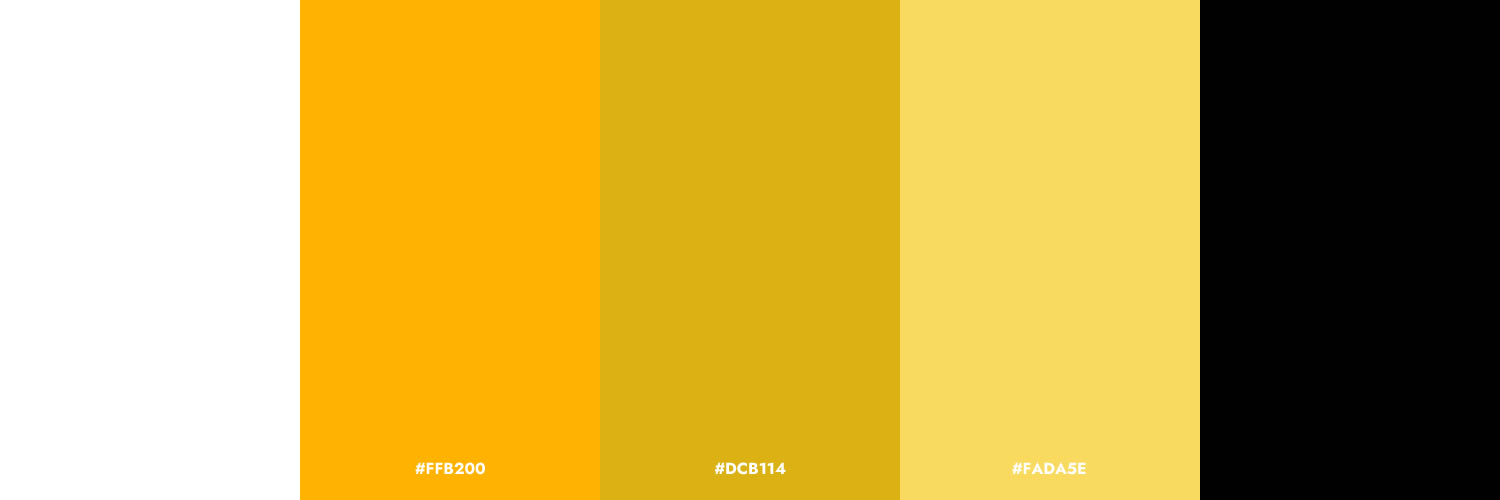
Because “Imperial Yellow” evolved over thousands of years of dynastic history, there are a few highly precise historical web hex codes used to represent the color of the Yellow Emperor (Huangdi) and the supreme center axis of Wuxing cosmology:
- The True Imperial Gold Standard: #FFB200 (Chinese Yellow)
This is the universally recognized digital standard for Chinese Yellow. It is a rich, saturated, high-energy gold that leans strongly toward orange. This is the digital representation of the mineral- and plant-based dyes used to mirror the sun, divinity, and absolute imperial authority. - The Qing Dynasty Restoration: #DCB114 (Ming Huang)
If you want to use the exact color verified by modern textile historians, the Chinese Color Atlas mapped the spectral data of Ming Huang (明黄 / Bright Yellow) from the Qianlong Emperor’s court. Derived historically from Sophora japonica (pagoda tree buds), it has a measured web color value of #DCB114. - The Royal Robe Standard: #FADA5E (Royal Yellow)
Historically documented as a shade explicitly matched to the silk dragon robes of imperial Chinese dynasties, Royal Yellow is mapped on modern color indices to #FADA5E. It is slightly softer and creamier, resembling a high-status silk sheen under light.
Sources
- Wikipedia, “Yellow Emperor” — wikipedia.org/wiki/Yellow_Emperor
- Wikipedia, “Color in Chinese culture” — wikipedia.org/wiki/Color_in_Chinese_culture
- China Culture Pro, “Yellow’s Meaning in Chinese Culture” — chinaculturepro.com/yellow-meaning-chinese-culture
← Return to Master Hub:
The Red Yellow Blue Silk Road Project